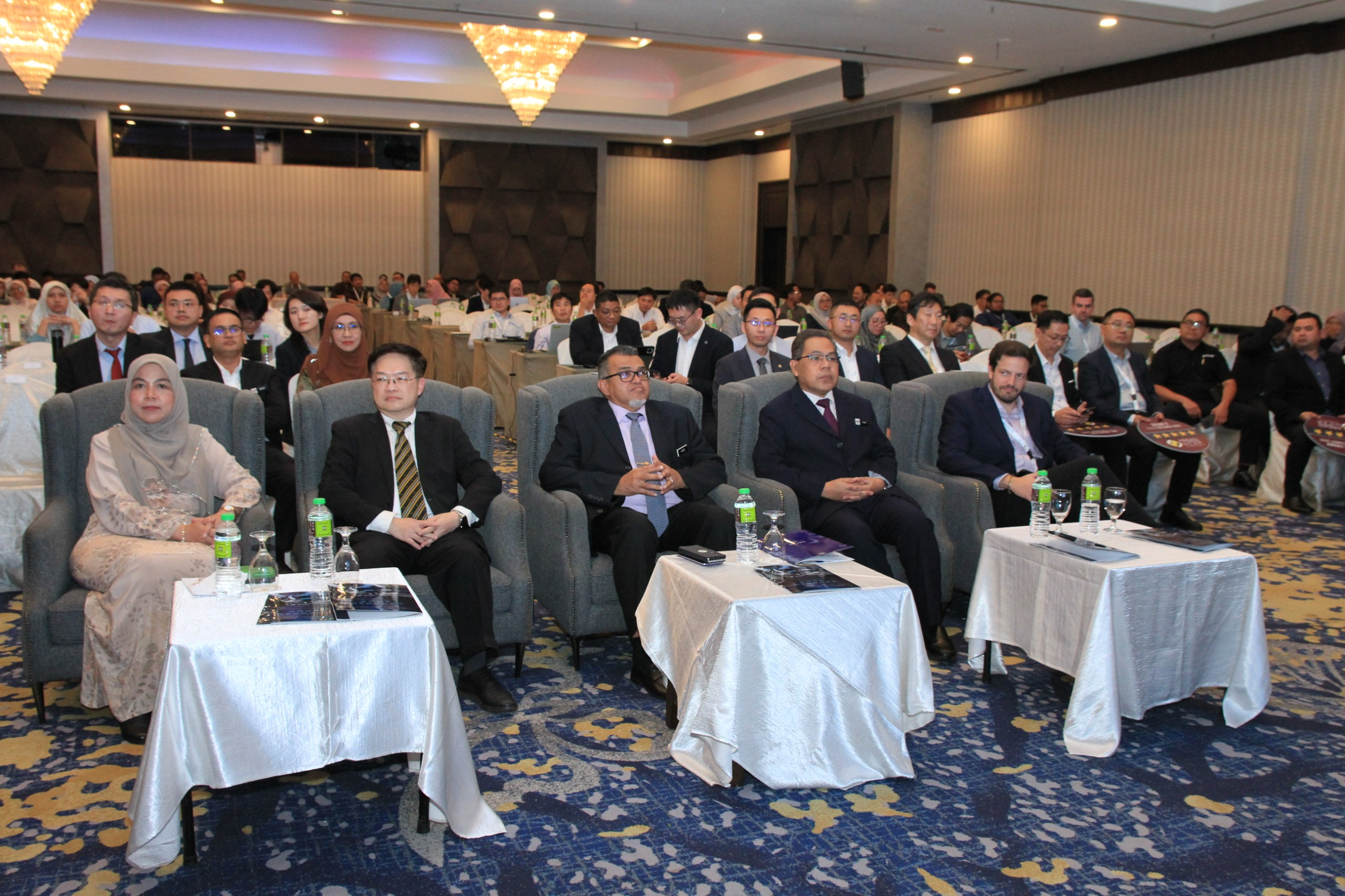
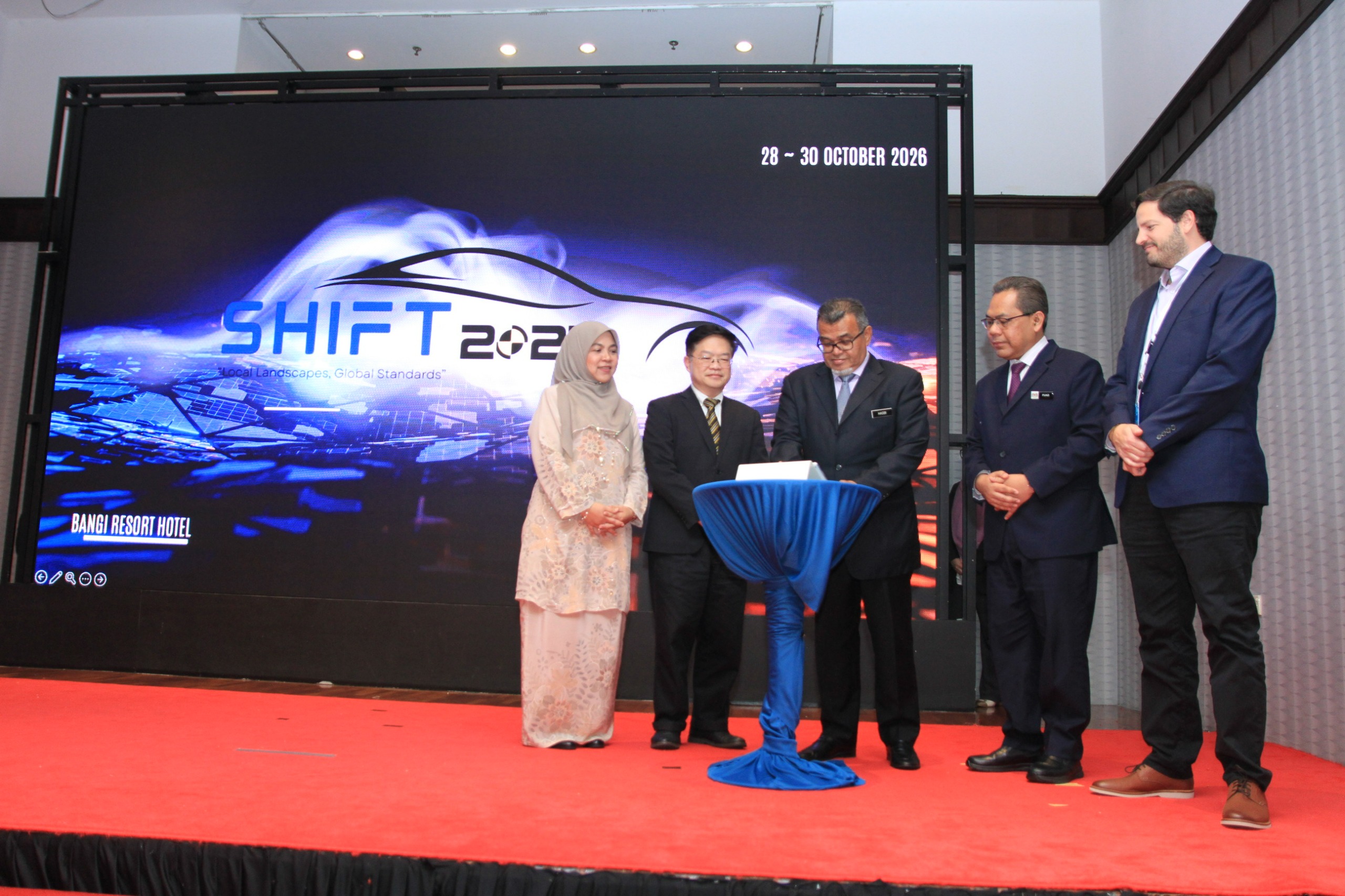
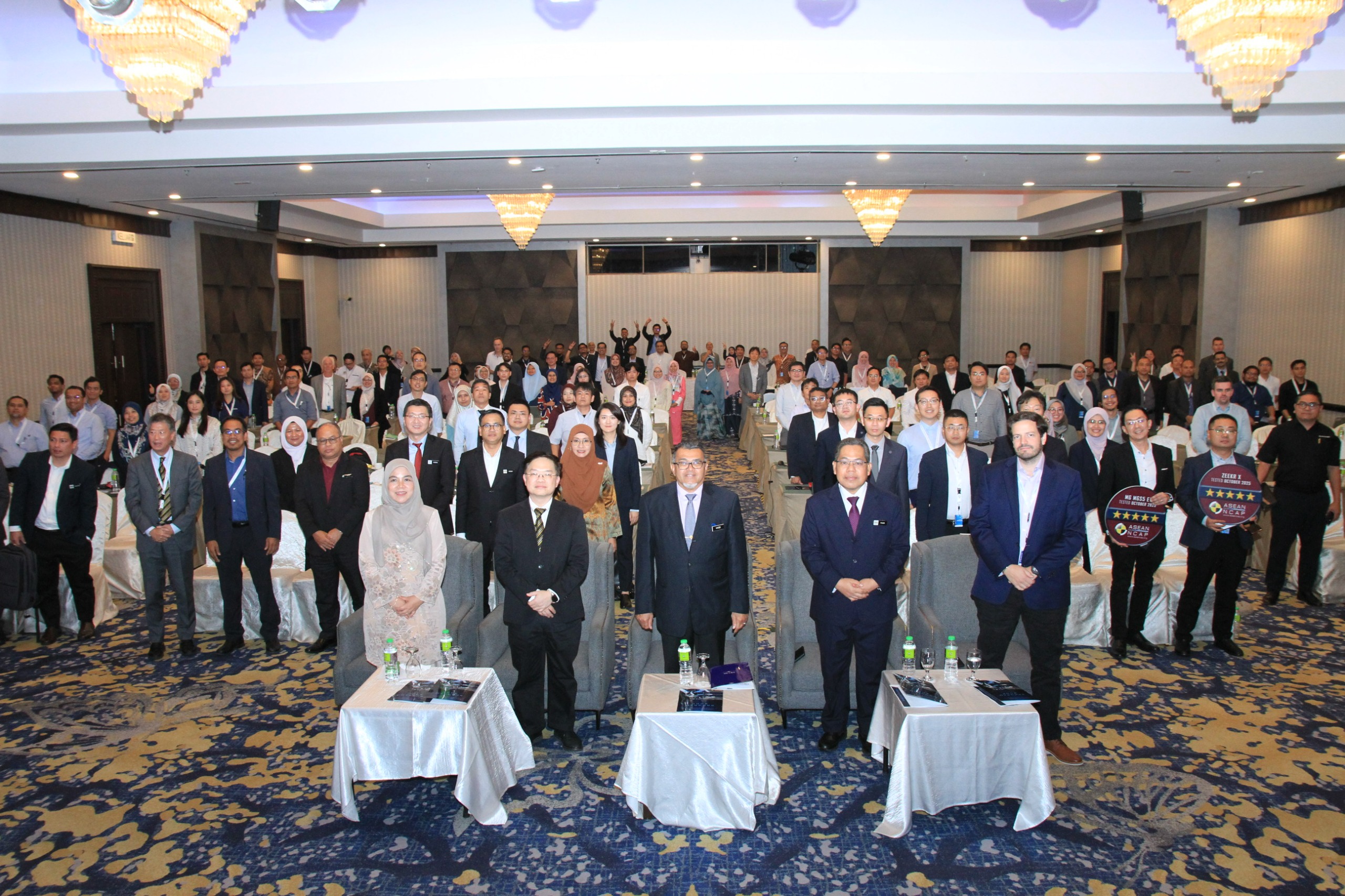
Bangi, Malaysia, 28 October 2025 – The International Conference on Safety and Holistic Innovation for Future Vehicles (SHIFT 2025) is being held from 28 to 30 October 2025 at Bangi Resort Hotel, Selangor. The event is jointly organised by the Malaysian Institute of Road Safety Research (MIROS) and the ASEAN New Car Assessment Program (ASEAN NCAP) under the theme “Local Landscape, Global Standard.”
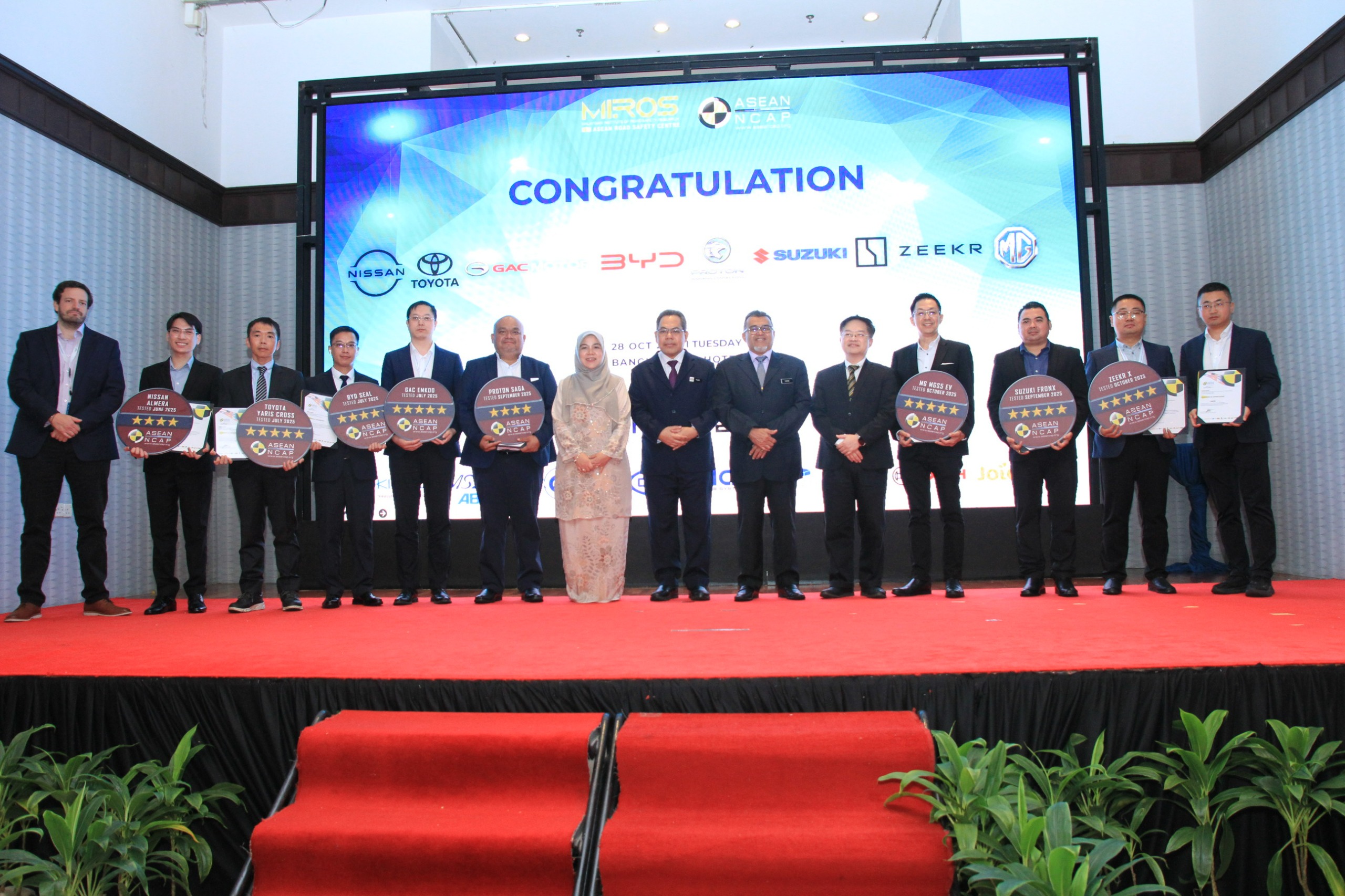
The opening ceremony of SHIFT 2025 was officiated by The Honourable Datuk Haji Hasbi bin Habibollah, Deputy Minister of Transport, Malaysia, who also presented the ASEAN NCAP Star Rating Awards to vehicle manufacturers demonstrating outstanding commitment to improving vehicle safety across the ASEAN region. The ceremony was also attended by Professor Dr. Wong Shaw Voon, Chairman of the MIROS Board of Directors; Professor Dr. Haslinda Yusoff, Assistant Vice-Chancellor (Institute of Quality and Knowledge Advancement, InQKA), Universiti Teknologi MARA (UiTM); and Mr. Wang Hao, Director of the ASEAN NCAP Project and Head of International Business Development, China Automotive Technology and Research Center (CATARC). The awards recognised vehicle models that achieved top safety performance under ASEAN NCAP’s 2025 assessments, underscoring ASEAN NCAP’s continuous efforts to promote the production of safer vehicles and strengthen regional automotive safety standards.
The conference also witnessed the exchange of Memoranda of Understanding (MoUs) between MIROS and two strategic partners: UiTM and CATARC. The collaboration with UiTM focuses on advancing research excellence, innovation, and capacity building in road and vehicle safety, while the partnership with CATARC strengthens cooperation under the China–ASEAN Vehicle Technology Partnership, focusing on vehicle safety and harmonisation of technical standards.
Through these MoUs, MIROS and UiTM will enhance data-driven research, explore new validation methods, and develop future experts in safe and smart mobility. Meanwhile, MIROS and CATARC will collaborate on ASEAN NCAP and C-NCAP roadmap research, enhance regional road safety capacity, align vehicle safety standards for Chinese exports to ASEAN, and explore joint laboratory and talent development programmes.
Over the three-day conference, policymakers, researchers, manufacturers, and technology leaders from around the world gathered to discuss the latest innovations, safety standard harmonisation, and evidence-based solutions to advance road safety in the ASEAN region.
In her welcoming address, MIROS Director-General, Assoc. Prof. Ir. Ts. Dr. Siti Zaharah Ishak emphasised that despite the rapid transformation of the automotive industry through electrification, automation, and digitalisation, road safety must remain the top priority. She highlighted that every mobility innovation must be grounded in the goal of saving lives and fostering public confidence in the transport system, stating that “road safety must never be compromised; every innovation and technological advancement should be built upon evidence, data, and our shared responsibility to protect lives on the road.” She also noted that the success of ASEAN NCAP in strengthening safety standards stems from strong collaboration among government, academia, and industry; in line with the theme “Local Landscape, Global Standard,” which reflects MIROS’s aspiration to produce practical, globally competitive safety solutions.
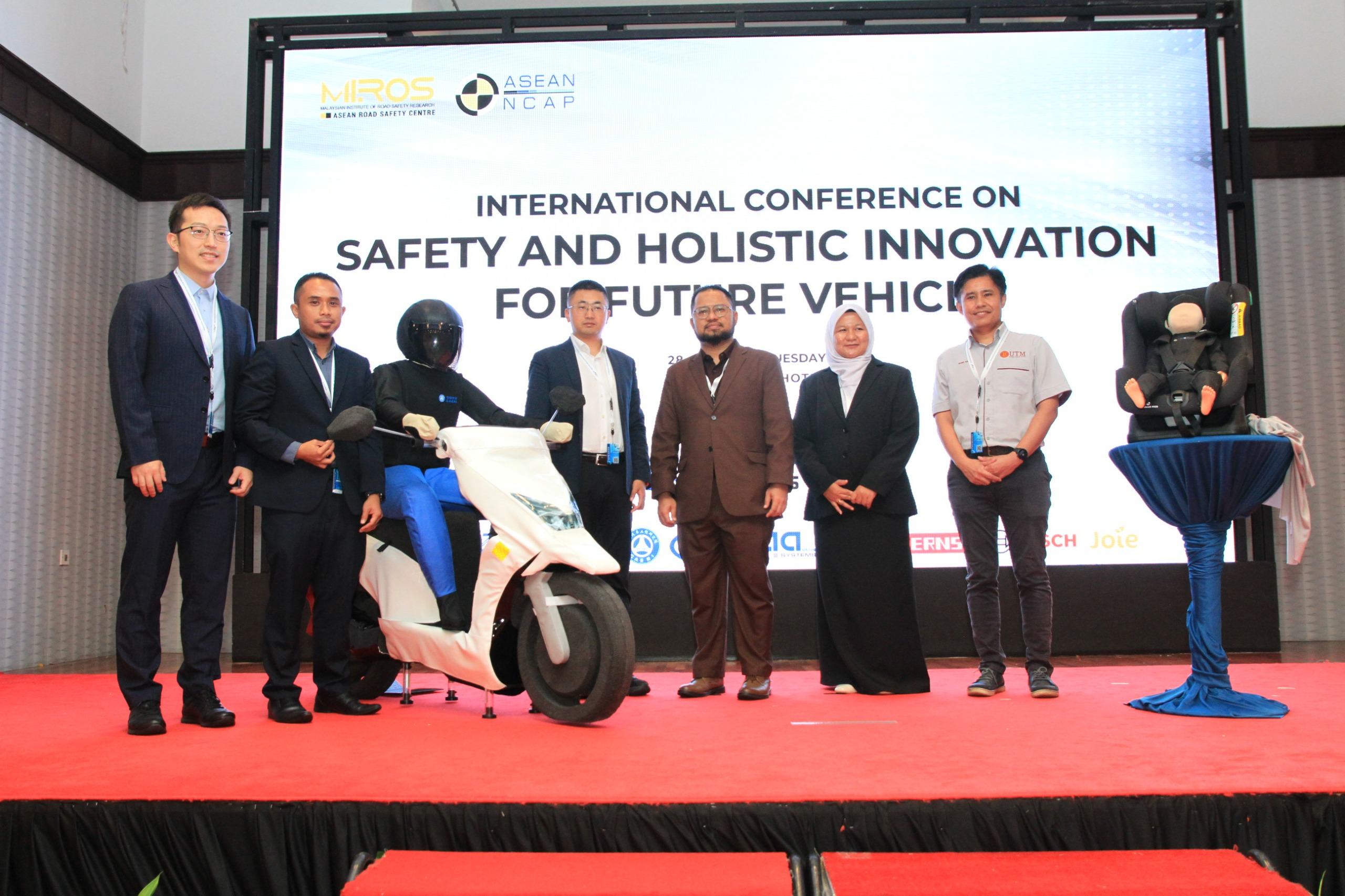
Two major innovations were introduced during SHIFT 2025, marking a significant leap in regional vehicle safety research and technology development:
a. ASEAN Motorcycle Target (AMT): Enhancing Motorcycle Rider Protection
The AMT is a high-precision test device designed to replicate scooter dynamics at speeds of up to 60 km/h. It forms the basis of the ASEAN NCAP Autonomous Emergency Braking (AEB) Car-to- Motorcyclist Test Protocol version 1.0, aimed at reducing motorcycle collision risks in ASEAN. “By taking into account the realities of two-wheeled vehicles, the AMT brings ASEAN closer to aligning its testing procedures with international standards while remaining relevant to regional traffic conditions,” said MIROS.
b. ASEAN Child Presence Detection (CPD) Subject: Protecting Children in Vehicles
Developed through a collaboration between MIROS, Universiti Teknologi Malaysia (UTM), ASEAN NCAP, CAERI, and ACTS Smart Solutions, the kiDS CPD-DS3 model simulates the presence and physiological behaviour of a 12-month-old infant. Equipped with adjustable breathing mechanisms, movable head and limbs, and a temperature-controlled surface, it represents the most realistic CPD model in the region. This innovation supports ASEAN NCAP’s mission to prevent heatstroke- related fatalities and enhance child occupant safety in vehicles.
SHIFT 2025 also features a distinguished line-up of international speakers, reflecting the strength of global collaboration in vehicle safety research. Among them are:
>> Seigo Watanabe, Japan Automobile Manufacturers Association (JAMA) — “The Future of Vehicle Safety Technology: Japan Perspective.”
>> Wang Guojie, China Automotive Engineering Research Institute (CAERI) — “EV Safety, Technology, and Assessment.”
>> Yang Jialin, China Automotive Technology and Research Center (CATARC) — “Introduction of C-NCAP New Side Impact and Frontal Impact Barriers Research.”
Technical presentations were also delivered by global safety experts from Global NCAP, Kistler, AB Dynamics, Dynamic Research Inc. (DRI), and 4activeSystems GmbH, underscoring the growing synergy between ASEAN and international safety partners.
More than 50 research papers were presented by road safety experts, academics, and researchers, covering topics such as ASEAN road crash data, advanced driver assistance systems (ADAS), driver behaviour, and data-driven safety technology analysis. This strong research participation reflects the region’s collective commitment to evidence-based policymaking, aligned with the United Nations Decade of Action for Road Safety (2021–2030), the National Transport Policy (2019–2030), and the Malaysia Road Safety Plan (2022–2030), which aims to reduce road fatalities by 50% by 2030.
SHIFT 2025 serves as a strategic platform to drive vehicle safety transformation in ASEAN through research, innovation, and multi-stakeholder collaboration. The insights, findings, and discussions from this conference will shape the future direction of ASEAN NCAP, ensuring that the region continues to move towards a safer, smarter, and more resilient mobility future.
PR SHIFT 2025 – EN
PR SHIFT 2025 – BM